Drought claims young cherry tree

The prolonged period of low rainfall has been obvious is the grass, which has been dying on the heath since the end of May. However, the parched conditions have now claimed a more substantial victim, a young cherry next to the cycle path on the upper heath.

Image shows bright yellow parch marks of the old shelter in the dying grass, with a dead cherry tree planted on top.

The tree was planted several years ago, on top of the old air raid shelter. Despite the FOBH tree warden making the council workers aware of the problem, planting continued. The tree has exceeded expectations, until now. The attached photo clearly shows the parch marks of the old shelter in the ground, with the poor tree planted on top.
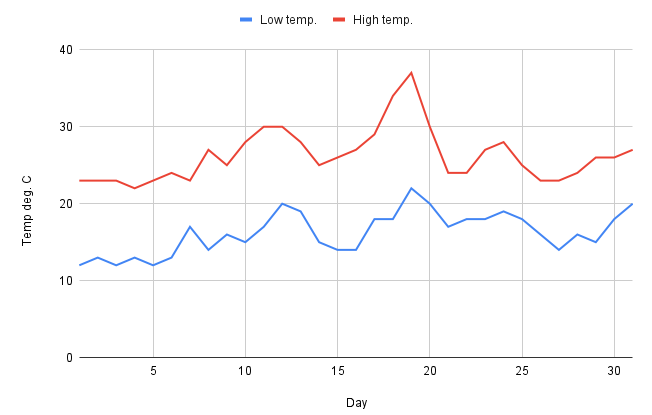
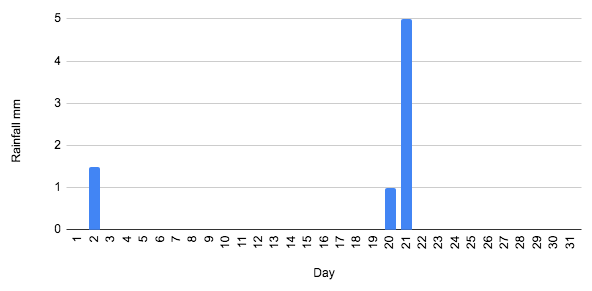
July Weather Records

Temperatures

Many parts of the UK broke all temperature records in July, even reaching more than 40°C in Lincolnshire. We measured a maximum of 37°C on the 19th with a hot wind which was especially trying.

Rainfall

Total rainfall only 7.5 mm. This is not a record, but taken with relatively low rainfalls over the previous 5 months, means that there could be a shortage of water.

See Weather History for more details all previous temperature and rainfall data.

Month’s Rainfall record

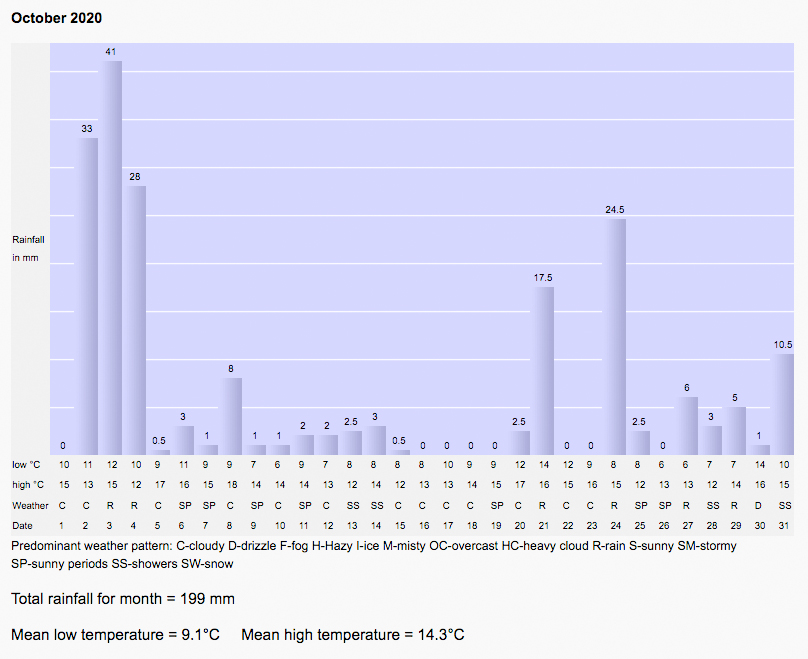
You can’t fail to have noticed all the rain in October in the Bernards Heath area. It was particularly noticeable on Saturday, 3rd October when 32 mm was the highest over the UK since 1986.  We measured 41 mm on that day when the southeast of England got more rain than the rest of the country.

The total for the month was 199 mm, the most that we have recorded for a single month over the last 7 years. Take a look at our records here.

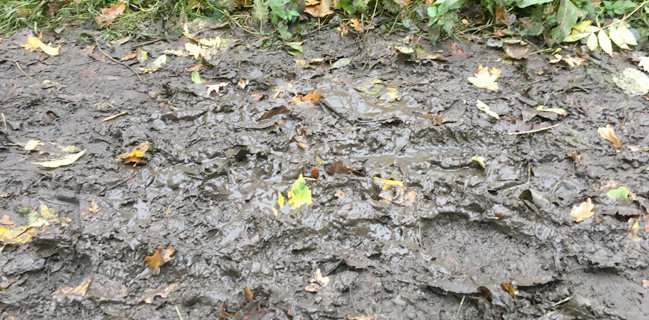
Bernards Heath is very slippery in places – take care.

Storm Ciara takes its Toll

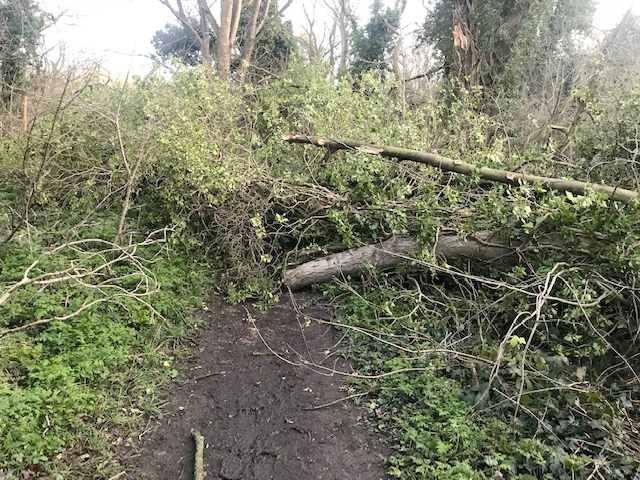
This large tree fell on a path during Storm Ciara on Sunday, February 9th. The path is the second on the right after entering Spinney Lane (see arrow on map alongside) and it is blocking the path, unless you are really determined to get through!  Now cleared! It was on the big side for the Friends to clear, so the Council has been informed. No doubt they have plenty of debris to clear – hopefully they will be able to get to it soon.

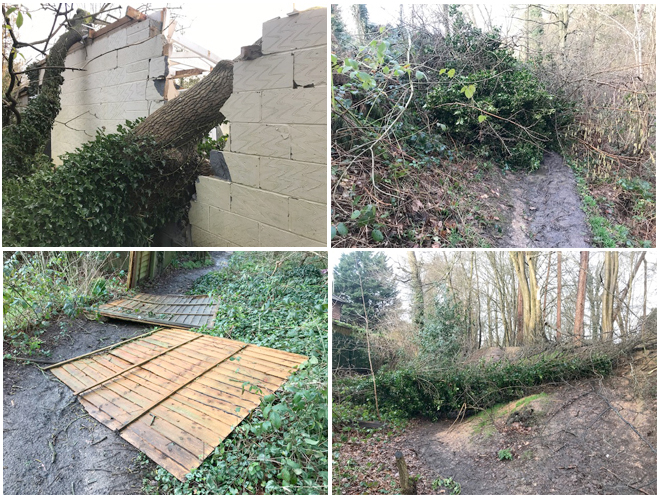
More substantial trees have since fallen as shown below:

Photos: PC

What is a Parhelion?

Parhelion, photographed on Bernards Heath, 29 December 2016.
This was the site of the Second Battle of St Albans 1461.

A parhelion or sun dog is an optical phenomenon that consists of a bright spot to one or both sides of the Sun caused by the refraction of sunlight by ice crystals in the atmosphere.  There is often a halo as well.  In this case there is just one sun dog and no halo.

Peter Burley, local historian, writes: Its historical interest is that a parhelion appeared on another Wars of the Roses battlefield in January 1461 at Mortimer’s Cross in Herefordshire. The Earl of March – the Yorkist commander and future Edward IV – seized the initiative and told his troops that it was a sign from heaven that they would win the battle. They did and the Yorkists adopted a symbol of three suns in splendour for their banners – and this won them a second battle at Barnet (1471) when the Lancastrian Earl of Oxford’s banner of stars was mistaken for the Yorkist suns and the Lancastrian army started fighting itself.

Photo: PB

First Snow of Winter 2019

About 2 cm of snow fell over the night 22/23 January and rapidly disappeared. The last substantial fall of snow (for St Albans) was in December 2017.

blood red moon

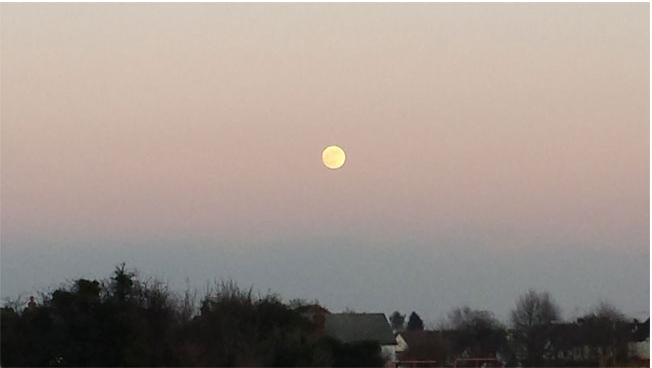
The weather was good enough to see the first phase of the ‘blood red moon’ over the Heath late afternoon on the 20th January. If you were up at 5 am on the 21st, you may have seen a more intense blood red colour.

Photo: MN

Rainfall – or the lack of it

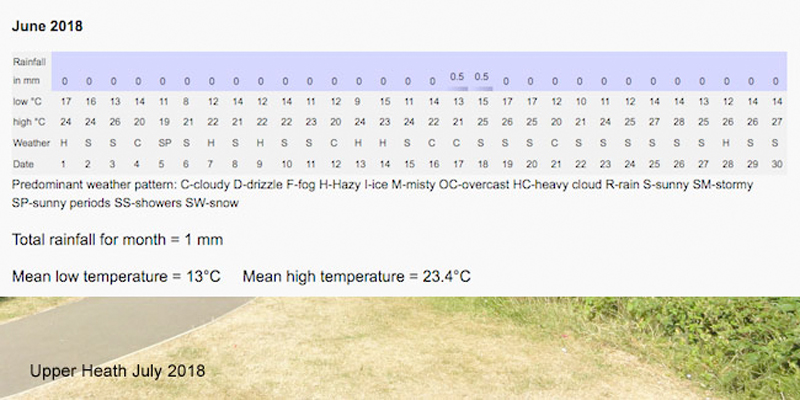
If you have a garden, then you’re probably getting anxious about the lack of rain – well the Heath could do with rain too.  Just one look at the grass above tells all.  We record rainfall and temperature very close to the Heath and the table above shows that only 1 mm fell during the month of June. There was a similar rainfall of just 1.5 mm in April last year.

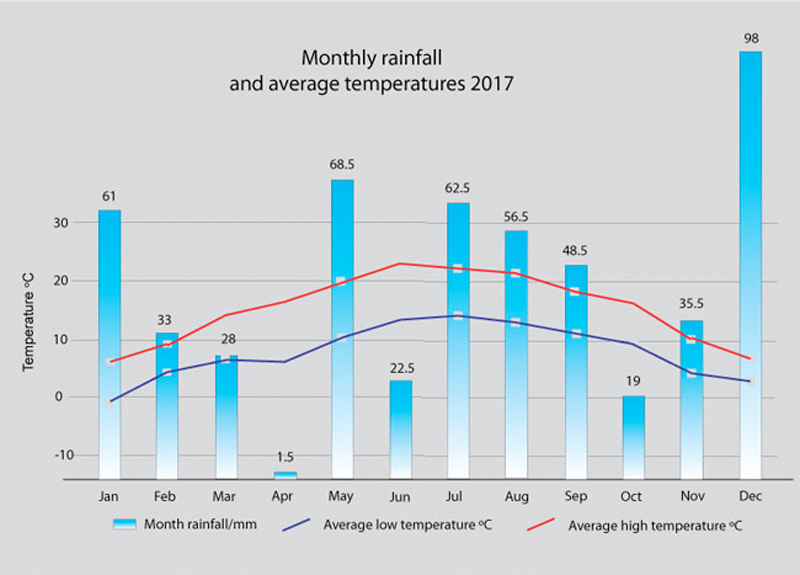
Bernards Heath Weather 2017

Remember those days from late March to mid May when grass began to turn yellow and water restrictions were a distinct possibility? There was only 1.5 mm of rain in April, see above.  The summer was not particularly dry by comparison to previous years and the year was rounded off with the highest rainfall of the year of 98 mm, including 10 cm of snow on the 10th December.

The highest daily rainfall was 33 mm on May 13th, and of temperatures, the lowest was -5 deg C on January 22nd and the highest 31 deg C on June 19th.

Weather measurements have only been made for the last four years and over that time total yearly rainfall fell from 740 mm to 534 mm. Average temperatures have stayed within a narrow range of less than 1 deg